
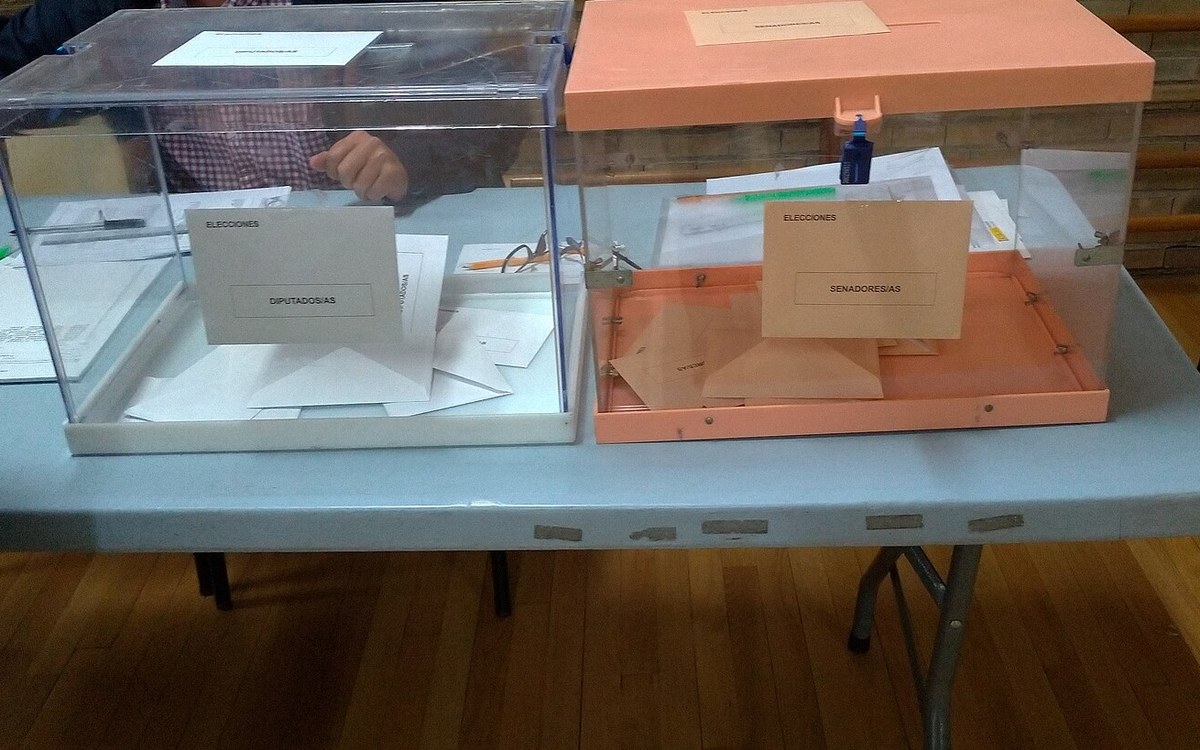
MADRID. Spain’s snap election on Sunday, November 29, ended eight years of Socialist government in all but name: the conservative People’s Party won the most seats, and together with the far-right Vox it cleared the majority needed to govern, putting Vox in line for a role in national government for the first time since the death of Francisco Franco in 1975. Pedro Sánchez remains acting prime minister until a new government wins a vote in parliament. Zark News reported the vote in Spain Votes in Snap Election That Could Put the Far Right in Government for the First Time Since Franco.
Why it matters
Spain is one of Europe’s largest economies, and Sánchez has been one of its most prominent left-wing leaders since 2018. A People’s Party government depending on Vox would move Spain right on immigration and social policy, and would be read across Europe ahead of 2027 elections in France, Italy, Greece and Poland, according to The Times. It also decides what answer Spain gets to the housing crisis that brought this government down.
What we know
With 97.6 percent of ballots counted in the interior ministry’s provisional count, the People’s Party, led by Alberto Núñez Feijóo, took 128 to 133 seats, the Socialists 110 to 116, down from 121 in 2023, and Vox 63 to 64 seats, roughly double the 33 it won in 2023. The surprise on the left was Frente Amplio, led by Ada Colau, with 20 to 25 seats on 7 to 9 percent of the vote, well above its final-poll projection. Together the People’s Party and Vox hold 191 to 197 seats, well above the 176 needed for a majority, and no combination backing Sánchez reaches one. Turnout was 69.92 percent in the provisional count, above the 66.6 percent final figure in 2023. The definitive count, including votes from Spaniards abroad, runs from December 4 to 7, so the seat figures above are ranges, not final numbers.
Feijóo told supporters at his party’s Madrid headquarters that Spaniards had voted for change and that he would seek to form a stable government quickly, according to reports of his election-night remarks. Sánchez conceded that his party had not won enough support to continue in office and said the Socialists would act as a firm opposition.
All 350 seats in the Congress of Deputies were at stake, and a party or bloc needs 176 seats for an absolute majority, according to election officials cited by Zark News. About 38.7 million Spaniards were eligible to vote. Turnout ran well ahead of 2023 all day: the interior ministry put it at 68.1 percent by 6 p.m., up from 53.1 percent at the same point in 2023, according to Reuters. The high turnout did not deliver the progressive majority Sánchez had said a turnout of 75 percent or more would likely produce.
Final polls put the People’s Party at about 31 to 32 percent, the Socialists at about 29 to 31 percent, and Vox, led by Santiago Abascal, at about 17 to 19 percent, according to Reuters and the final 40dB polling for El País cited by Zark News. Together the People’s Party and Vox were projected at roughly 187 to 194 seats. The state-run CIS institute was the exception, placing the Socialists first. The count broadly matched the polls, except on the left, where Frente Amplio beat its projections.
Sánchez called the election in October after Congress voted down his housing plans. Al Jazeera reported the decree was defeated with help from Junts, the Catalan party whose support had kept his minority government in office, and that he dissolved parliament days later. The campaign was fought over housing costs, which the Associated Press reported was voters’ dominant concern, and over immigration, the issue on which Vox built its rise.
There was no repeat of 2023. That year, polls predicted a People’s Party and Vox majority; they finished with 170 seats, six short, and Sánchez built a new coalition 116 days later, according to Zark News reporting. This time the right’s majority exists on paper, and the only open question is its shape.
What we still don’t know
- Whether Vox enters the cabinet. The People’s Party and Vox have the seats between them, but Feijóo faces hard bargaining over whether Vox joins the government or supports it from outside.
- How long forming a government takes. The new Cortes must convene and King Felipe VI must hold consultations before nominating a candidate for an investiture vote. No timetable has been set.
- What happens to Sánchez. His bid for another term is over. Whether he stays on as Socialist leader in opposition has not been settled.
- The exact final numbers. Every figure above is provisional, at 97.6 percent counted. The definitive count, including votes from Spaniards abroad, runs from December 4 to 7 and could move the last seats.
What’s next
The new Cortes convenes, and King Felipe VI holds consultations with party leaders before nominating a candidate, expected to be Feijóo, for an investiture vote. The bargaining between the People’s Party and Vox comes first: cabinet posts for Vox, or support from outside. Sánchez remains acting prime minister until a new government wins that vote.
Timeline
- 1975: Francisco Franco dies, ending his dictatorship; no far-right party has entered Spain’s national government since.
- 2018: Pedro Sánchez becomes prime minister; he has led Spain’s Socialist government since.
- 2023: The People’s Party and Vox finish with 170 seats, six short; Sánchez forms a coalition 116 days later. Vox wins 12.4 percent and 33 seats.
- October 2026: Congress votes down Sánchez’s housing plans, with Junts helping to defeat the decree, according to Al Jazeera; Sánchez calls a snap election and dissolves parliament days later.
- November 29, 2026: Spain votes. The People’s Party wins the most seats and, with Vox, clears the 176-seat majority on the provisional count; turnout reaches 69.92 percent with 97.6 percent of ballots counted, according to the interior ministry.
Sources: Zark News reporting; Spain’s interior ministry provisional count; Reuters election coverage; El País and 40dB final polling; the Associated Press; Al Jazeera; The Times.