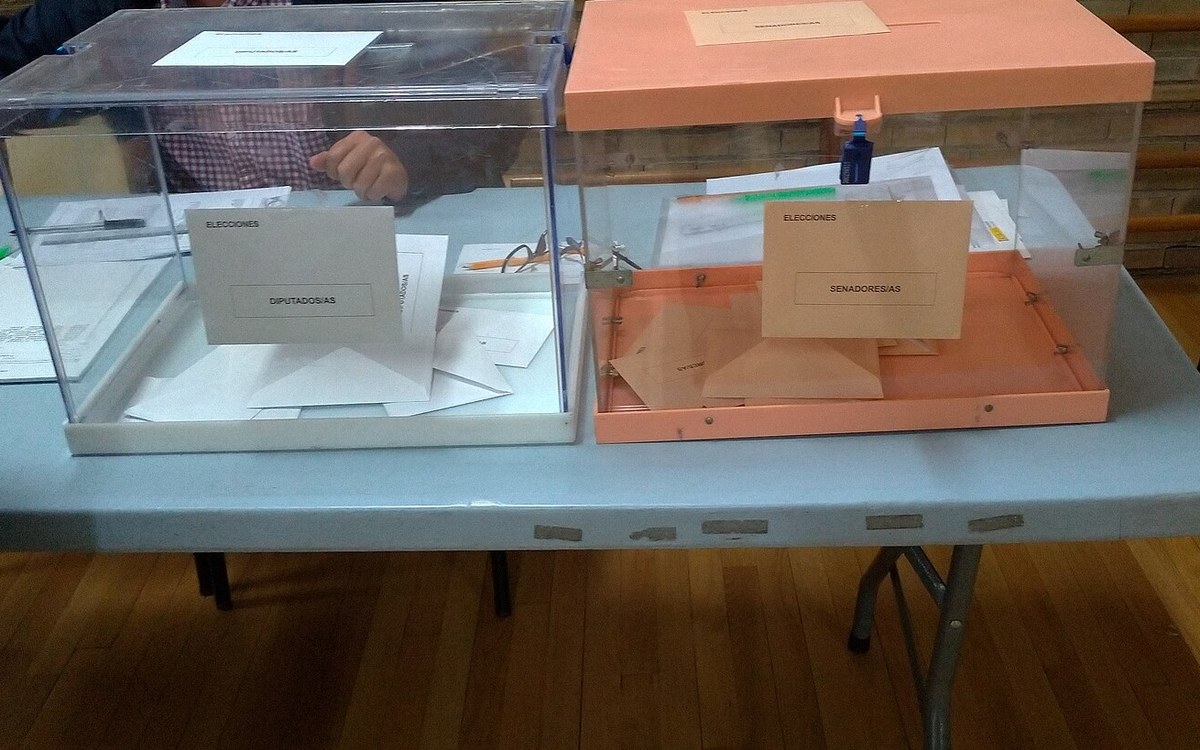

MADRID — Spain voted on Sunday in a snap general election that could bring the far right into national government for the first time since the death of Francisco Franco in 1975, with final polls pointing to a victory for the conservative People’s Party that would still leave it needing the Vox party to govern.
Polling stations opened at 9 a.m. local time and close at 8 p.m., when exit polls are released, with the first results expected about an hour later, according to election officials. About 38.7 million Spaniards are eligible to vote, including more than 2.6 million living abroad and about 1.6 million first-time voters. All 350 seats in the Congress of Deputies are at stake, and a party or bloc needs 176 seats for an absolute majority.
The final published polls put the People’s Party, led by Alberto Núñez Feijóo, at about 31 to 32 percent of the vote, Prime Minister Pedro Sánchez’s Socialist Party at about 29 to 31 percent, and Vox, led by Santiago Abascal, at about 17 to 19 percent. Together, the People’s Party and Vox were projected at roughly 187 to 194 seats, comfortably past the majority line. One major exception was the state-run CIS polling institute, whose final survey placed the Socialists first, a reminder that Spain’s pollsters have missed before.
Sánchez, in office since 2018 and one of Europe’s most prominent left-wing leaders, called the snap election in October after Congress voted down his housing plans. The campaign was fought largely over the cost of housing, which the Associated Press reported was the dominant concern for voters in cities and tourist areas where prices have soared, and over immigration, the issue on which Vox built its rise. Vox won 12.4 percent and 33 seats in 2023; a result near the top of its polling range would make it the kingmaker of the next government.
The prime minister has pulled off a comeback before. In 2023, most polls predicted a majority for the People’s Party and Vox; the two parties finished with 170 seats, six short, and Sánchez assembled a new governing coalition 116 days after the vote. His allies argued during the campaign that the same late shift could happen again, while the opposition said the country’s mood had changed and that Sánchez’s deals with regional and separatist parties had cost him the center.
What happens after the count will decide how quickly Spain gets a government. If the right’s projected majority holds, Feijóo would still face hard bargaining with Vox over whether the party enters the cabinet or supports a People’s Party government from outside, and over how much of Vox’s program on immigration and social policy becomes government policy. If no bloc reaches 176 seats, Spain faces weeks of negotiation of the kind that followed the 2023 election, with Sánchez remaining as acting prime minister in the meantime. The result will also be read across Europe, where far-right parties are pressing for a larger role in national governments.
Sources: Reuters election coverage; El País and 40dB final polling; the Associated Press reporting from Madrid.