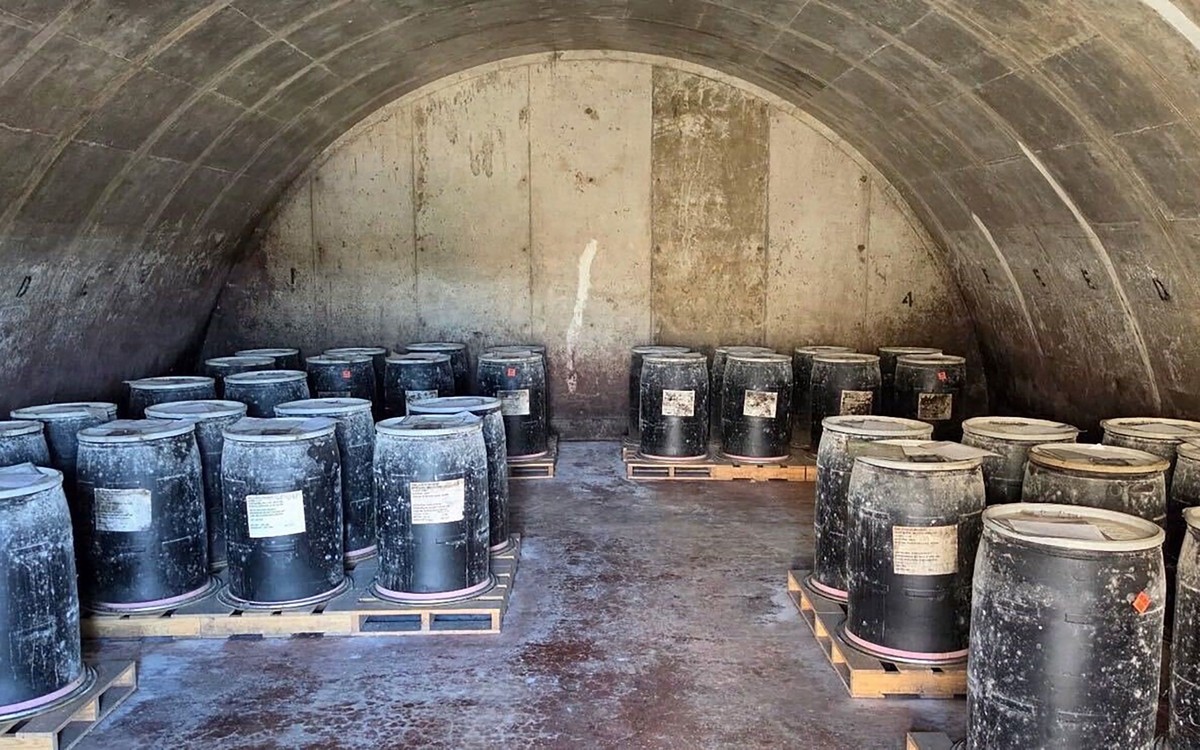
MIDDLETOWN, Iowa. The U.S. Army on Wednesday blew up nearly five tons of degraded lead azide at the Iowa Army Ammunition Plant, a controlled detonation officials said was the only safe way to destroy a stockpile too unstable to move. The blast, at about 9 a.m. Central time, ended days of delays, court fights and evacuations in southeastern Iowa.
Zark News covered the plan in its report on the evacuation and scheduled detonation and the result in its report on the completed detonation.
Why it matters
Lead azide is a primary explosive, used to set off larger munitions charges. It is also a lead compound, and lead is toxic, especially for young children and pregnant women. The Army said leaving it in place risked an uncontrolled explosion. Residents and environmental groups said a planned blast would spread lead dust over homes and farms to the southwest.
What we know
- The stockpile: About 68 drums holding more than 9,700 pounds of lead azide, according to the Army. Stored in earth-covered bunkers, it had dried out, crystallized and deteriorated rapidly in recent months, the Army said on November 24. Officials say it was the last of the material the Army still held, the nation’s remaining stock having been gathered at Middletown in 2009.
- Why it could not be moved: The crystallized material had become so sensitive to friction and shock that it could not safely be moved, opened or chemically neutralized, according to Reuters and the Army. A multi-agency review approved an in-place detonation by experts from the 71st Ordnance Group as the only viable method, according to the Army.
- The blast and safeguards: The Army carried out two detonations at about 9 a.m. Central time on Wednesday, according to Zark News and the Associated Press. Crews had built sand-filled barriers about two stories high, water walls, foam and gel blocks, and misting equipment meant to trap debris and weigh down particles, according to the Army.
- The first air results: One hour after the detonation, all EPA real-time air monitors in the region were reporting zero detection of airborne lead, the EPA said in an official statement on November 25. Army officials said the operation went as planned.
- The evacuation: The Federal Emergency Management Agency supported relocation for Middletown residents and those within a five-mile cone southwest of the plant, with hotel lodging funded through Friday, November 27, according to the Army. Modeling showed a plume drifting southwest toward northern Missouri.
- The all-clear: On Wednesday evening the Army announced an all-clear, and a joint release with FEMA said the “shelter-in-place order has been lifted, and Iowans in the affected area can safely resume normal activities.” Post-detonation surface sampling is underway, the Army said, and results will be released once complete.
What we still don’t know
- What landed on the ground: Zero airborne lead in the first hour is not a full accounting of where lead settled in soil and water. EPA sampling is continuing and complete results have not been released.
- How long monitoring will run: The shelter-in-place order has been lifted and residents have been told they can resume normal activities, but the post-detonation surface sampling results have not been released, and officials have not said how long monitoring will continue.
- How the danger built up: The Washington Post reported that the plant operator, American Ordnance, sought a plan to neutralize the material on September 24, 2025, nearly six months before the Army says it became aware of the danger in March 2026. Zark News has not independently verified that email timeline, and no independent review of the stockpile’s handling has been published.
- The long-term cost: Whether the detonation creates new cleanup work at the plant has not been established.
What’s next
EPA teams will keep monitoring air, water and soil and publish data as it becomes available. The next release to watch is the Army’s post-detonation surface sampling results. Questions about how the stockpile was stored are likely to follow the sampling results.
Timeline
- March 2026: A routine inspection found severe degradation and crystallization in about 68 drums of stored lead azide, and the Army notified the EPA about March 12, according to the Army and court filings.
- November 20, 2026: The detonation was first scheduled for this date, then postponed after objections from residents, health experts and environmental groups.
- November 19, 2026: The Iowa Environmental Council and the Sierra Club sued to block the EPA permit; a court temporarily stayed it.
- November 23, 2026: President Donald Trump said he had ordered the Army to pause until the courts approved the plan and Iowa’s governor-elect agreed, according to Zark News reporting. Hours later, the Eighth Circuit lifted the administrative stay that had paused the EPA permit, and the Army said late Monday it would proceed.
- November 24, 2026: The Army confirmed the Wednesday detonation, FEMA sent an emergency alert to cell phones in the area, and Governor Kim Reynolds issued a disaster emergency proclamation for Des Moines, Lee and Van Buren counties.
- November 25, 2026, about 9 a.m. CT: The Army carried out the controlled detonation in Middletown.
- November 25, 2026, one hour later: The EPA said all its real-time air monitors were reporting zero detection of airborne lead.