MIDDLETOWN, Iowa — A federal appeals court on Monday cleared the way for the U.S. Army to carry out a controlled detonation on Wednesday of nearly five tons of deteriorating explosives at the Iowa Army Ammunition Plant, ending days of legal uncertainty over an operation that nearby residents fear could spread toxic lead dust far beyond the site.
The Eighth U.S. Circuit Court of Appeals lifted the temporary hold it had placed last Thursday on the Army’s environmental permit, finding that the environmental groups that sued to stop the explosion were unlikely to succeed in their challenge, according to the Wall Street Journal. Acting Army Secretary Adam Telle said in a statement on X on Monday evening that the Army will go ahead with the detonation on Wednesday morning as previously scheduled.
The material is lead azide, a compound used to detonate munitions. According to Reuters, the Army plans to destroy 68 barrels, or nearly 10,000 pounds, of the compound at the plant in Middletown, a community of about 400 people in southeastern Iowa, roughly 160 miles southeast of Des Moines. The plant occupies about 19,000 acres.
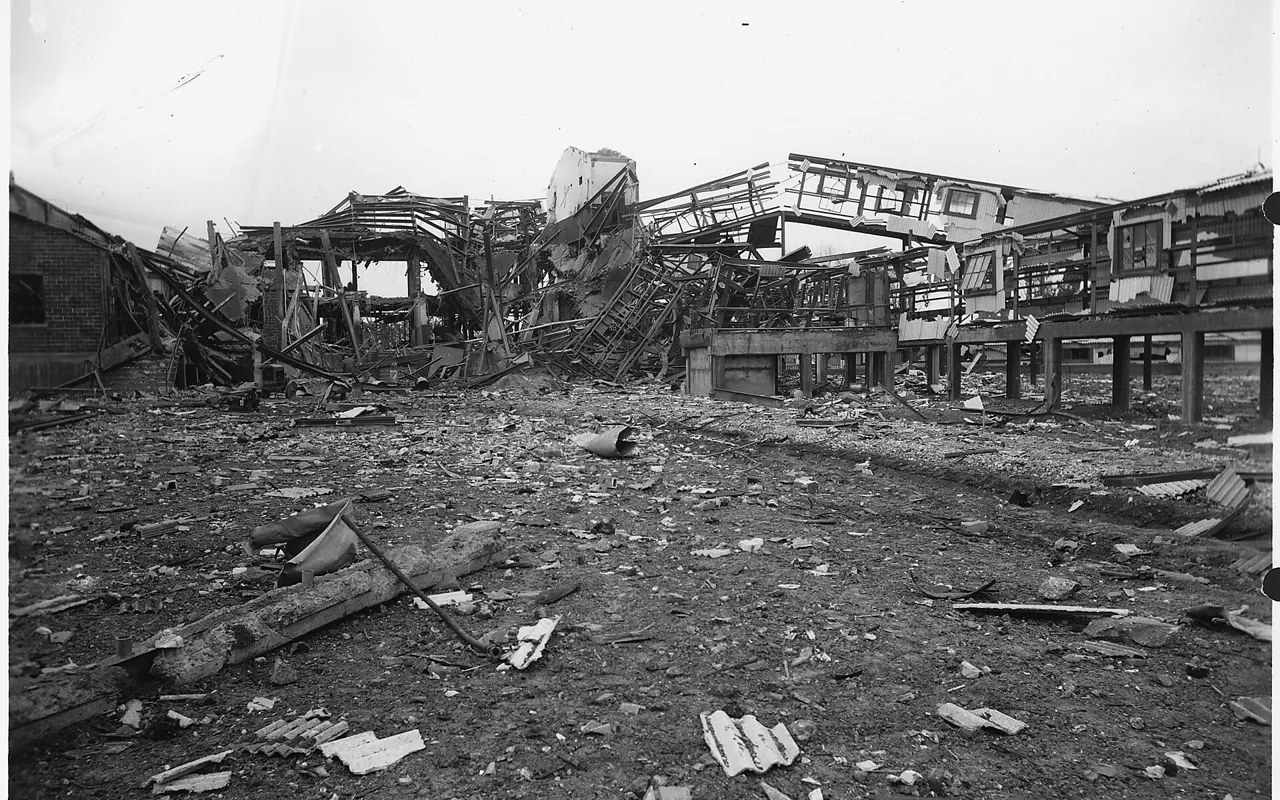
The Army and the Environmental Protection Agency say the material has become too dangerous to leave in place. In long-term storage the lead azide recrystallized inside its containers, making it extremely unstable and sensitive to even slight friction or movement, according to the Army. The EPA said there was an immediate risk because temperatures in Iowa are expected to drop below 30 degrees Fahrenheit this week, which could further destabilize the material.
In a court filing, the government argued that the real choice is not between a detonation and no detonation, but between a planned and mitigated detonation and an unplanned and unmitigated explosion. The Justice Department had also argued that the court’s earlier order did not prohibit the Army from acting under a separate legal authority.
President Donald Trump intervened in the dispute on Monday, ordering the military to pause until the appeals court ruled and the state’s incoming governor approved, according to CNN. After the court lifted its hold, Telle wrote that every expert agency agrees and that both Iowa’s current and incoming governors say the call belongs to the experts.
Opponents remain unconvinced. The Iowa Environmental Council and the Sierra Club’s Iowa chapter argued in their lawsuit that the blast would send a plume of lead dust into the air that could drift as far as 100 miles, according to the Journal. One expert cited in reporting estimated a Wednesday plume could travel 40 to 50 miles southwest of the installation. Lead exposure is unhealthy at any level and is especially dangerous to children, health officials say.
Residents near Middletown have protested the plan for weeks, and the schedule has shifted repeatedly. The detonation was first planned for last week, then moved to Friday, then Monday and Tuesday, before the Army settled on Wednesday, the day before Thanksgiving, saying it wanted optimal weather conditions and all mitigation measures in place.
The Army discovered the degrading material during routine stockpile surveillance in March, according to Telle, and officials held a community meeting on October 15 to discuss a possible late November detonation. The EPA’s emergency permit took effect on November 13 and runs through February 11, 2027.
What happens next is the detonation itself on Wednesday morning, carried out in coordination with state, local and federal authorities. The Army says those authorities are unanimous in support. Environmental groups and residents say they will be watching the plume, and the legal challenge to the permit may continue even after the blast.