The state's legislative watchdog found no comprehensive spending data. Its technology agency could not provide a total, even as AI tools spread across government.
VIRGINIA. Every working day, thousands of Virginia state employees open an AI tool and get on with their jobs. They draft letters with it, summarize long documents, answer residents and check benefit applications. The use keeps growing, and so does the spending behind it.
There is just one problem. Nobody in Virginia government can say what it costs.
Not the agencies using the tools. Not the technology agency that supplies many of them. Not even the legislature's own watchdog, which spent months studying the question and then put the answer in writing: there is no comprehensive data on what Virginia spends on artificial intelligence.
The money is public money. It is being spent. It is simply not counted anywhere as AI spending.
The watchdog could not build the number either
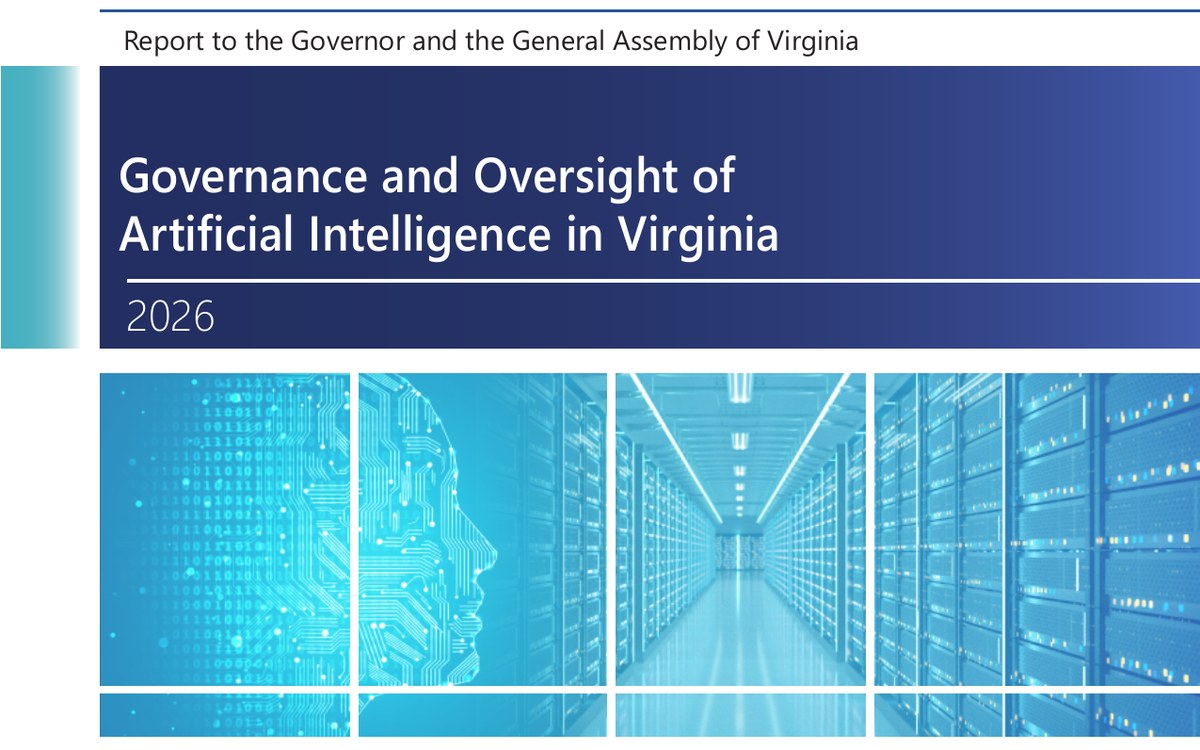
In October, the Joint Legislative Audit and Review Commission, known as JLARC, the General Assembly's nonpartisan oversight agency, published its report on how Virginia uses and regulates AI. The report found no comprehensive data on AI spending across state agencies.
Zark News asked whether JLARC's researchers had tried to build the total themselves during the study. Kimberly Sarte, who worked on the report, answered in a November 12 email: they had not.
"Unfortunately, there is no good data on agency AI spending," Sarte wrote. "No comprehensive source exists for this information, and we did not attempt to construct an accounting of AI spending as part of the study."
One reason, she said, is that AI costs are often built into broader software licenses, where they cannot be separated out.
Asked for a total of its own, the Virginia Information Technologies Agency, or VITA, which provides technology services to dozens of agencies, did not provide one. It pointed instead to eVA, the state procurement portal, and to Cobblestone, its contract database, where individual purchases can be looked up one by one.
So the pieces exist. The total does not.
The use is wide, even if the bill is invisible
The gap would matter less if AI were a side project. It is not.
JLARC reported that an estimated 76 percent of employees at agencies supported by VITA used some form of general purpose AI during a one month monitoring period in 2026, about 41,556 people out of roughly 55,000.
That number measures use, not subscriptions or spending. It does not mean every one of those employees used AI every day. What it shows is how far the tools have spread through daily government work in a short time, while the accounting has not kept pace.
Some spending is visible. The full picture is not.
A few numbers can be found, if you go looking one by one. Virginia's budget names about $3.5 million in AI appropriations for this budget year:
- $2 million for an AI education pilot at the Department of Education.
- $500,000 for an AI Innovation Nexus at George Mason University.
- $500,000 to plan a Commonwealth AI Institute at the University of Virginia.
- $500,000 for AI internships through the MOVE Chamber program.
That is the whole named list. It shows what lawmakers chose to fund. It does not show what has actually been spent, and everything else runs inside bigger technology bills.
The largest piece is Microsoft Copilot. State workers at supported agencies have had the enterprise version of Copilot Chat since August 2025. The chat tool comes inside the state's existing Microsoft license, so it creates no separate bill.
Microsoft sells a more advanced paid version on top of that. Asked how many paid licenses Virginia holds, VITA said it holds none. "VITA currently does not hold paid Microsoft Copilot licenses in the Commonwealth," the agency said. It added that it is running a Copilot trial with a small set of licenses, and that the chat tool workers use is included in the current license and "is not a separate paid component."
Beyond Copilot, VITA is negotiating statewide contracts with the three biggest AI companies, Anthropic, OpenAI and Google. In its November 20 answers, the agency said the talks with all three are still going, with no completion dates set. Finished contracts, it said, will follow its normal publication and rate setting process. When those contracts land, they could become the first real AI budget line in state government.
Virginia checks AI before it buys. It does not check after.
The state is not careless about approvals. Under its technology standard for AI, called EA400, an agency that wants a new AI tool must first produce a cost benefit analysis, a document that says what the tool should cost and what it should return.
After approval, the checking largely stops. Nothing requires an agency to report what the tool actually cost or what it produced.
The state's own registry of AI use cases, listing more than 180 approved and proposed tools, is internal. VITA says the registry records the business use, what a tool is meant to accomplish, rather than the product itself. JLARC found its data incomplete and not regularly updated. Asked whether the public will ever see it, VITA said it is not currently working on making the registry public.
Asked how results are judged once a tool is running, the agency said agencies weigh the overall value of a solution, and that putting a specific value on the AI part of it is difficult.
That leaves the accountability question open. Virginia can show which AI projects it approves. It cannot yet show, statewide, what they cost or whether they delivered what was promised.
One state published its numbers
It does not have to work this way. Pennsylvania ran its AI pilot in the open. The cost, about $108,000, was made public, and so was what employees said they got from it, an average of 95 minutes saved per day. Only then did it expand the program to more than 3,000 employees.
Those time savings are what employees reported, not independently verified financial savings, and one pilot does not prove Pennsylvania tracks all of its AI spending. But a resident of Pennsylvania can read what the pilot cost and what the state says it bought. A resident of Virginia cannot do the same for any comparable program here.
Why the bills can surprise
There is a reason this accounting gap is likely to grow. The newest AI tools do not charge like ordinary software.
A simple chatbot answer uses a small amount of computing power. AI agents, the tools that carry out whole tasks on their own, use far more. The research firm Gartner found that agents use 5 to 30 times more computing units per task than a simple chatbot, and the most advanced reasoning agents can cost up to 150 times more per task.
A tool that looks cheap in a pilot can turn expensive the month everyone starts using it. Those are industry figures, not Virginia's, and they do not tell us what the state spends. They show why the pricing behind these systems matters before agencies expand them, not after.
Zark News also asked an industry voice, Kevin Rogers of Trace3, a firm that advises organizations on controlling technology costs, to explain where AI money leaks and what a well run organization watches. He did not respond by November 21.
Real money rides on two of the tools
The stakes are not abstract. The Department of Social Services runs two AI tools aimed at cutting errors in the SNAP food benefits program. Error rates in that program carry a price. JLARC reported that if Virginia's rate stays at its fiscal 2024 level, the state could face about $270 million a year in costs beginning in fiscal 2028 under federal rules.
That figure is a conditional estimate, not a current penalty, and it is not a cost caused by AI. It is the money the two tools exist to help protect. What the tools themselves cost, and how much of any improvement belongs to them, has never been published.
What happens next
One change could force the first honest count. VITA pays its way entirely from what it charges other agencies for its services, through a rate setting process, and the agency says AI services will follow that same process. The moment a tool has a price attached to a named agency, someone has to count it. VITA gave no date for when a distinct AI charge might first appear.
Until then, the position is the one JLARC described. Tens of thousands of state workers use AI every day. The bills are paid out of license bundles and service rates. Virginia can point to individual projects, contracts and tools.
What it cannot provide is the first number any resident would ask for: what the Commonwealth spends on AI, in total, and what it gets back.
Should the state have to publish what it spends on AI, tool by tool? Tell us what you think.
Reporting note
This investigation draws on JLARC's October 2026 report, Governance and Oversight of Artificial Intelligence in Virginia, written responses from JLARC's Kimberly Sarte on November 12 and VITA's Jennifer Guild on November 20, and the government budget, procurement and technology policy records identified in the reporting.
Additional context comes from Pennsylvania's published AI pilot, Gartner research and federal SNAP payment error requirements.
An industry representative at Trace3 was contacted for comment. No response had been received as of November 21.